The best microphones for podcasting range from simple USB desk models to dynamic mics that can move between a computer and an XLR setup. Choose by how you record, how much desk space you have, and whether you need hands-on monitoring or room to upgrade.
Quick Top Products
MAONO PD300X
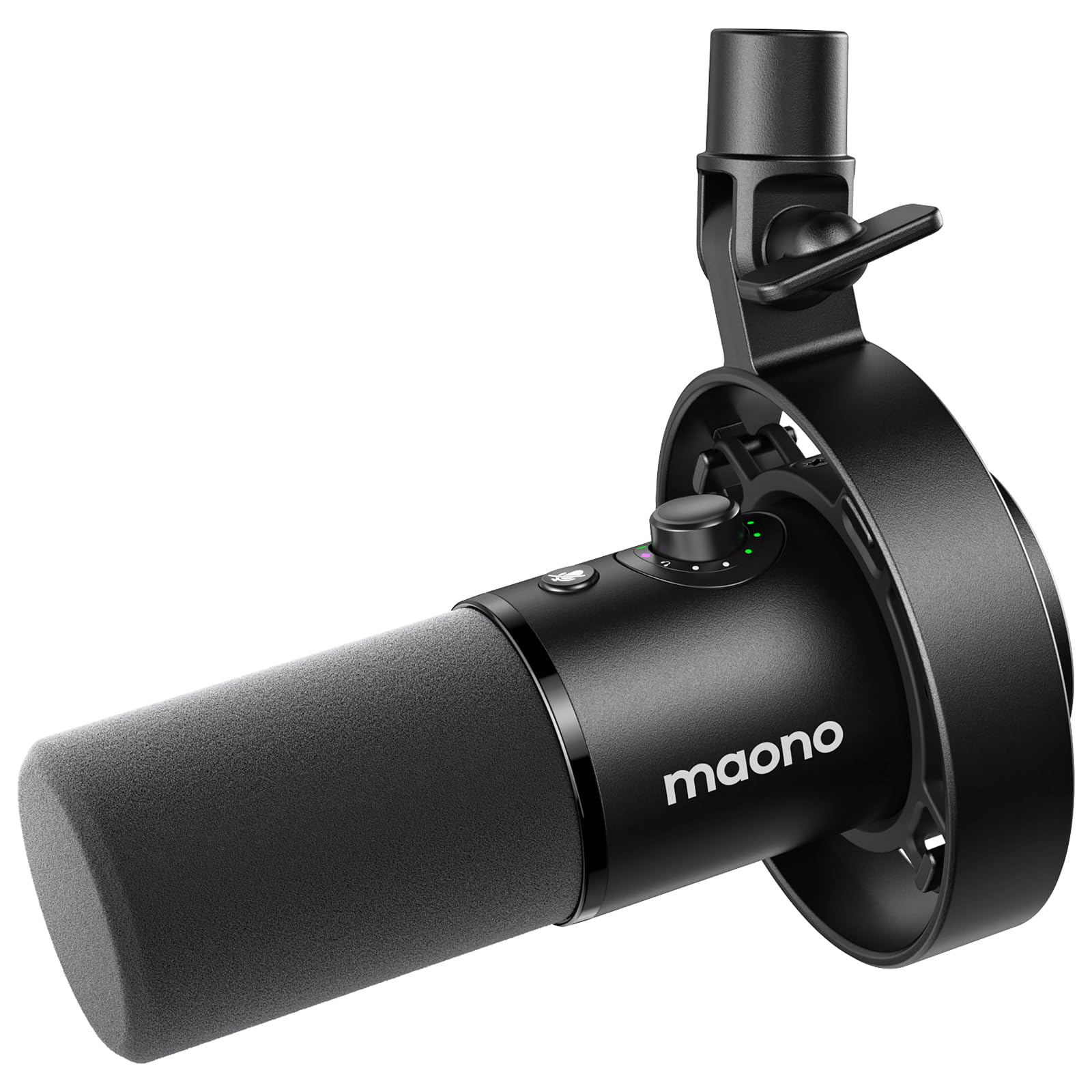
- USB and XLR connections support computer and studio setups.
- Four preset modes offer quick sound-setting changes.
- The smart knob combines gain, headphone volume, and monitoring controls.
Best For: Podcasters who want software tone controls and both USB and XLR connections.

MAONO PD400X
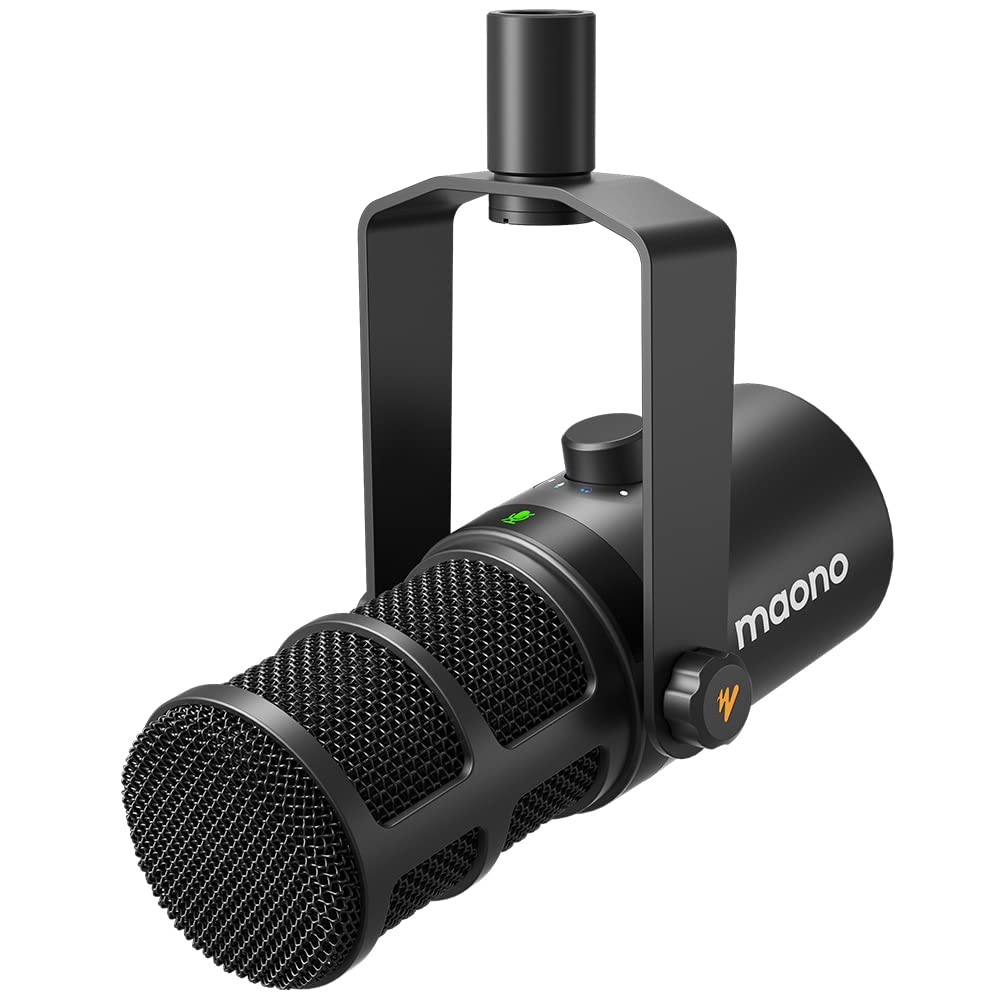
- USB and XLR outputs allow computer or interface connections.
- A single knob adjusts gain, headphone volume, and monitor mix.
- The app offers EQ, limiter, and compressor adjustments.
Best For: Creators who want USB convenience, XLR connectivity, and app-based voice adjustments.
Samson Q2U
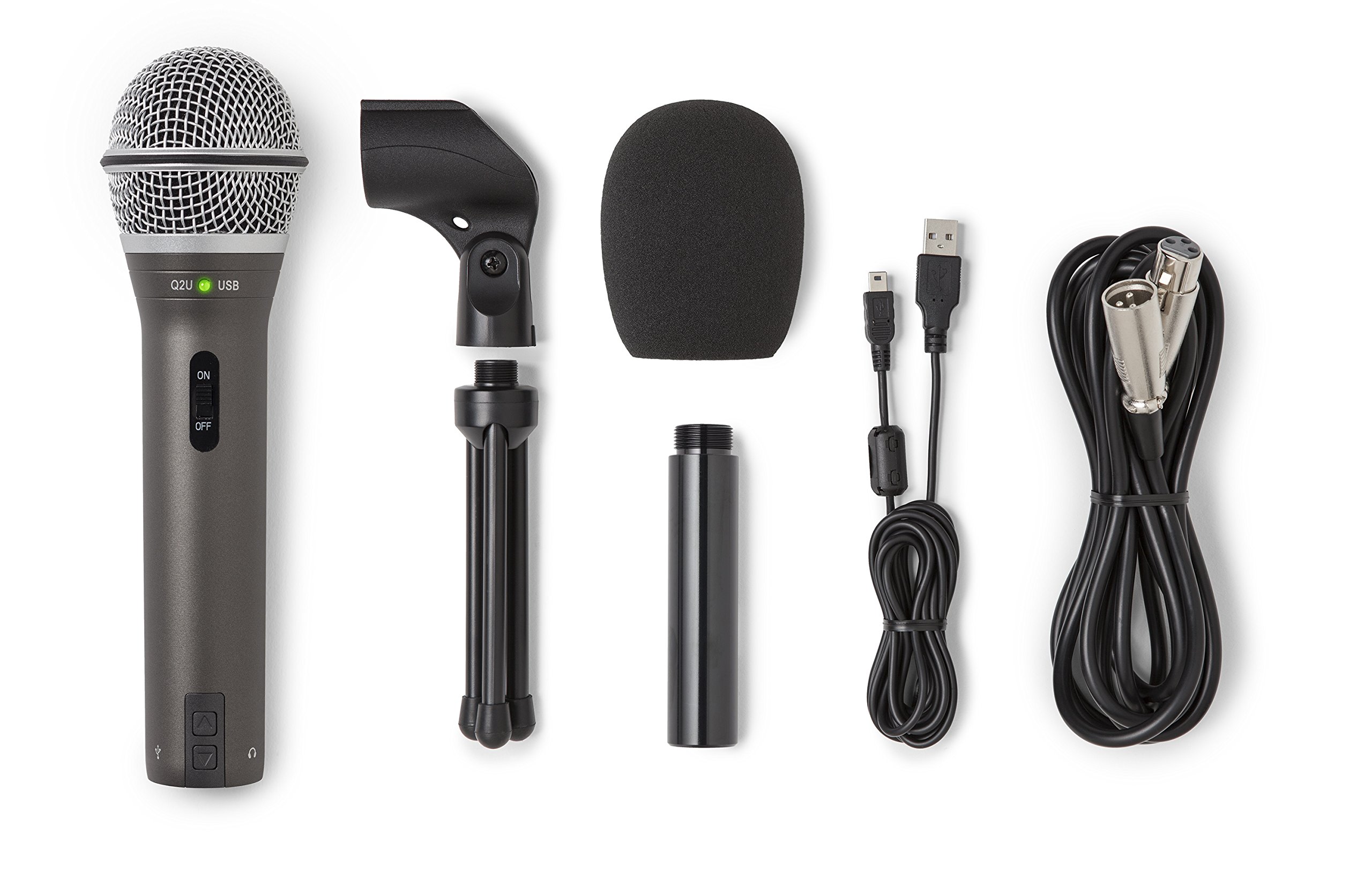
- USB-C and XLR provide two connection options.
- It connects directly to a computer with USB-C interface.
- The pack includes a stand, windscreen, and both cables.
Best For: New podcasters who want a handheld dynamic microphone and both USB-C and XLR connections.
FIFINE AmpliTank K688
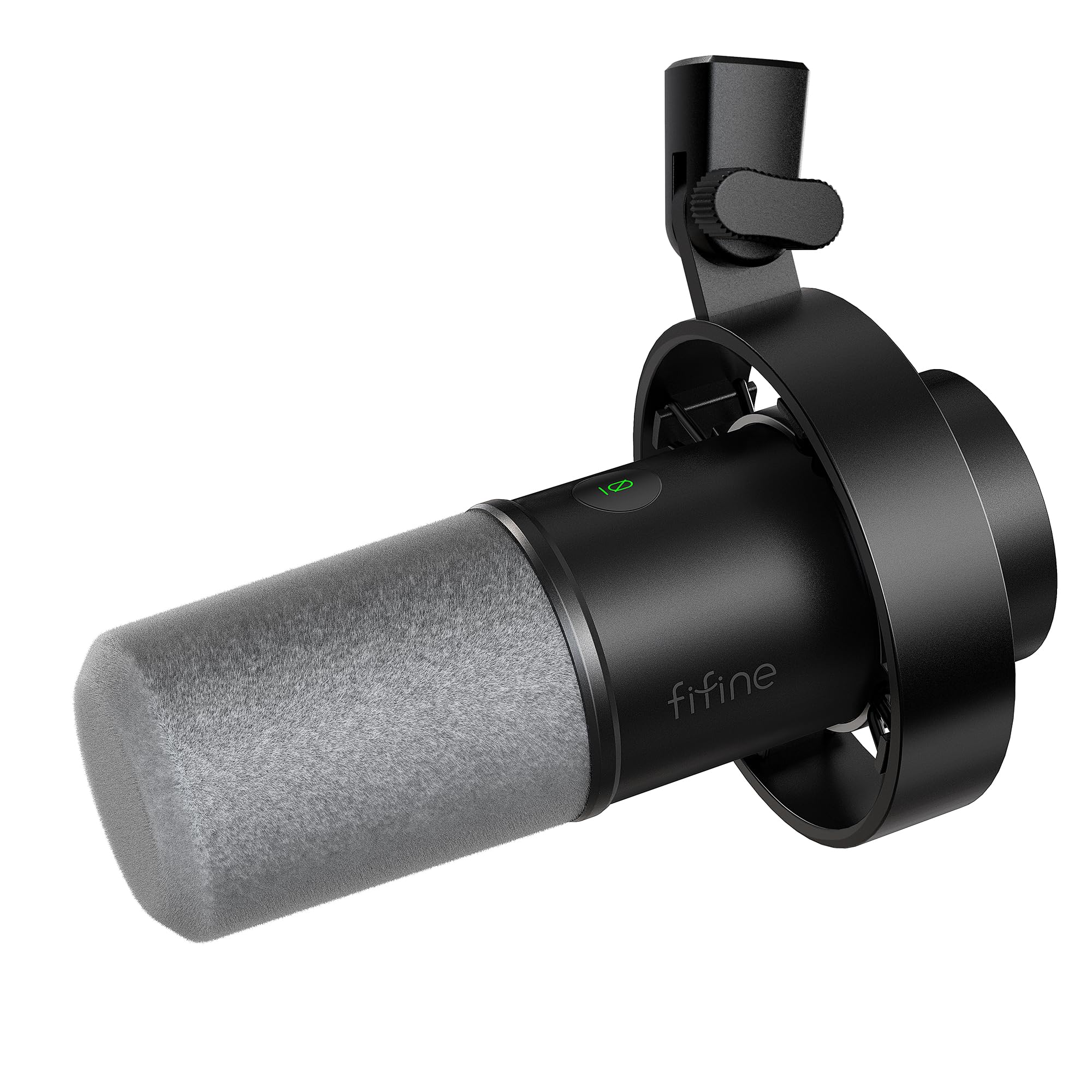
- USB and XLR offer computer and studio connection options.
- A headphone jack and volume control support monitoring.
- The package includes a shock mount and windscreen.
Best For: Podcasters seeking a dynamic USB/XLR mic with direct headphone monitoring and physical controls.
FIFINE AmpliTank K688P
- USB and XLR offer flexible recording connections.
- The mic includes a shock mount, windscreen, and thread adapter.
- The 8.2ft cable connects directly to a computer.
Best For: Voice-focused podcasters who want USB simplicity now and XLR connectivity for an interface later.
FIFINE AmpliTank K688W
- USB and XLR provide two connection methods.
- USB mode offers mute, volume, and headphone monitoring.
- Shock mount and windscreen are included.
Best For: Podcasters who prefer a white dynamic microphone and already have or plan to add a stand.
SteelSeries Alias Pro Kit
- The microphone connects over USB or XLR.
- USB works with a PC, while XLR works with a mixer or sound card.
- USB connection enables RGB lighting and onboard audio controls.
Best For: Podcasters and streamers who need an XLR mic and mixer controls for a one- or two-computer rig.
SteelSeries Alias
- USB connectivity makes this a computer-focused microphone.
- Sonar provides mixing, app routing, and AI noise cancellation.
- LEDs indicate audio level and mute status.
Best For: Computer-based podcasters who want a USB mic with software mixing and on-mic level cues.
MAONO DM40
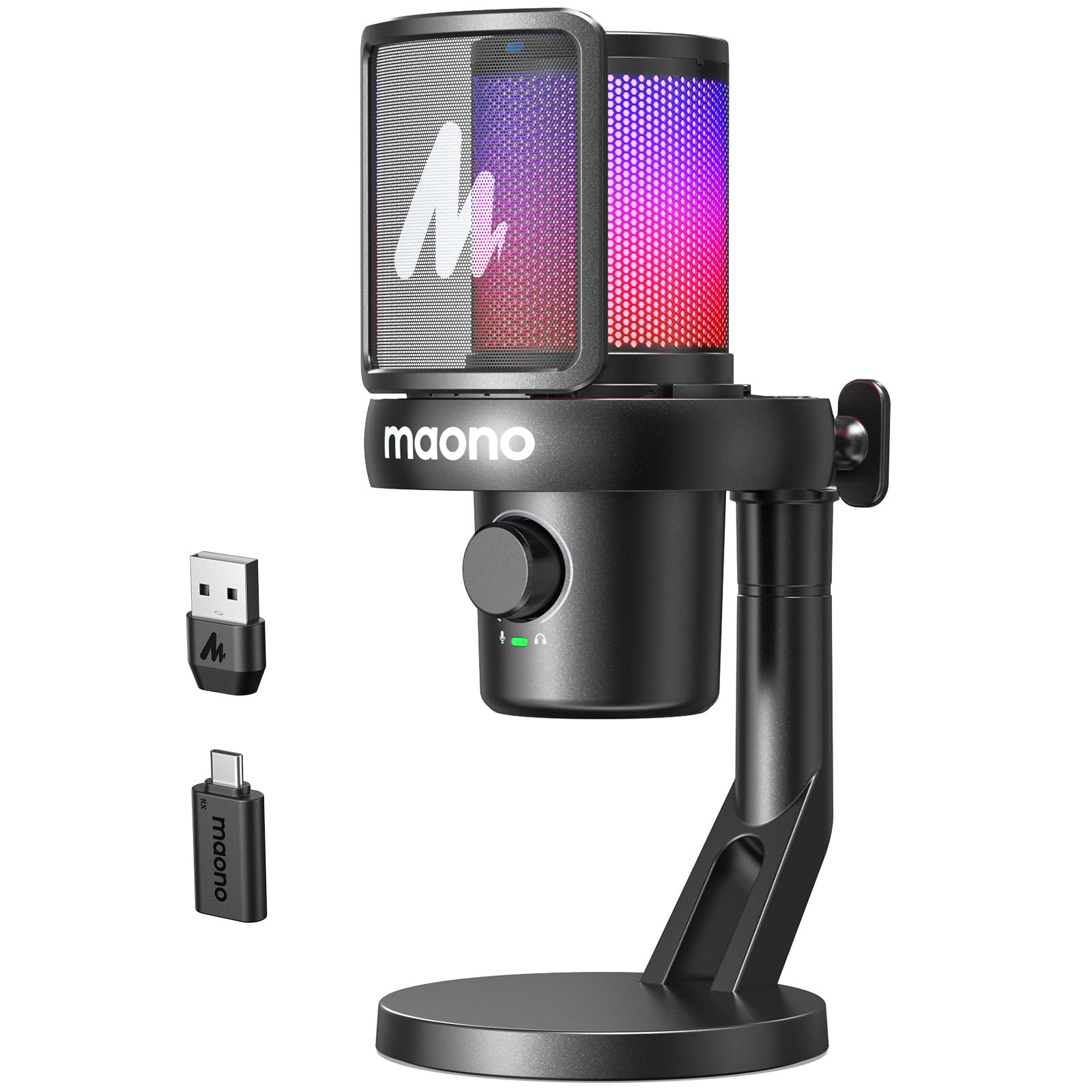
- Wireless and wired connections support different recording situations.
- Battery life is up to 40 hours.
- Three levels of noise cancellation are available.
Best For: Podcasters who want to move around while recording or switch between wired and wireless use.
MAONO PD100
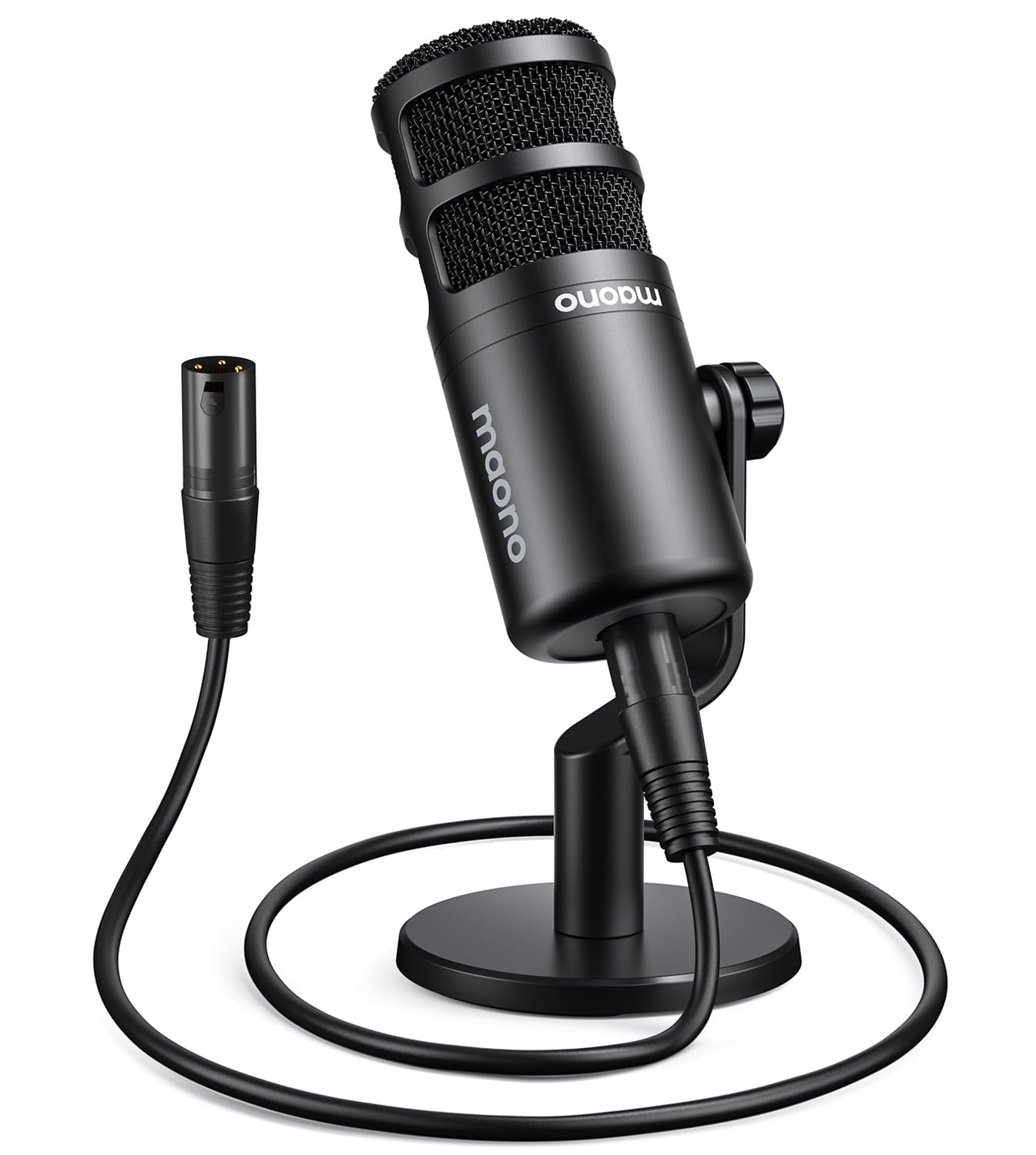
- This is an XLR dynamic microphone for podcasting and vocal recording.
- The package includes a desktop stand, extender, base, and cable.
- The built-in pop filter attenuates plosives.
Best For: Home-studio podcasters who already use an interface or mixer and want a desktop XLR package.
Flexible USB and XLR Recording
MAONO Dynamic Microphone-XLR USB Podcast Recording Mic: for Vocal Recording, Content Creation, Home Studio, Voiceover, with 192kHz/24bit, Noise Reduction, Mic Gain, Monitoring, Mute (PD300X)
The MAONO PD300X combines USB and XLR connectivity with software tools for shaping a podcast voice. Its 192kHz/24bit sampling, visual graphic EQ, four preset modes, and noise reduction options provide several ways to adjust a recording workflow.
The smart knob combines mic gain, headphone volume, and monitoring, while the mute button offers quick control. USB supports direct computer use, and XLR can connect to mixing consoles and other equipment.
This flexibility comes with more settings to manage than a basic plug-and-play microphone, so it suits creators who want to tune their sound and explore different recording setups.
Best For: Podcasters who want software tone controls and both USB and XLR connections.
| Pros | Cons |
|---|---|
|
|
Choose the PD300X if you want a USB starting point with an XLR route available for a later studio setup. Its software EQ, preset modes, and noise reduction provide more control than a bare-bones microphone, while the combined knob keeps common adjustments close at hand.
Before buying, check which stand and cables are included and whether your intended XLR setup has the connections you need.
App-Based Voice Shaping
MAONO Dynamic Microphone, USB/XLR Podcast PC Microphone with Software, EQ,Tap-to-Mute, Headphone Jack, Gain Knob & Volume Control, Studio Mic for Broadcast, Recording, Streaming & Gaming (PD400X)
The PD400X is a dynamic podcast microphone built around practical controls and two connection paths. USB offers plug-and-play computer use, while XLR connects to an interface, mixer, or portable PA system.
Its 3-in-1 knob adjusts mic gain, headphone volume, and monitor mix; a touch mute key has an LED indicator. The MAONO LINK app adds EQ, limiter, compressor, and vocal tone and distance options in USB mode.
That mix of hardware and software control suits podcasters who like to make adjustments during recording, though the added app features are most useful when you are willing to configure them.
Best For: Creators who want USB convenience, XLR connectivity, and app-based voice adjustments.
| Pros | Cons |
|---|---|
|
|
Pick the PD400X if you want convenient physical controls and app-based sound shaping without giving up an XLR connection. The mute indicator and combined knob help keep common recording adjustments accessible.
Its advanced app mode depends on USB, so check whether that workflow fits your recording chain. Also verify what mounting hardware and cables come with the offer before planning a desk setup.
Handheld USB-C and XLR Starter
Samson Q2U Dynamic USB-C/XLR Microphone
The Samson Q2U is a straightforward dynamic microphone with both USB-C and XLR plugs. It can connect directly to a computer with a USB-C interface, or join an XLR recording chain.
The package includes a tripod desktop stand, extension, mic clip, windscreen, USB-C cable, and XLR cable, making it a ready-to-assemble starting point. Its handheld form is useful for a host who prefers to speak close to the mic, but it does not provide the listed onboard gain, mute, or headphone monitoring controls found on some alternatives.
Its appeal is the uncomplicated choice of connection and included basics.
Best For: New podcasters who want a handheld dynamic microphone and both USB-C and XLR connections.
| Pros | Cons |
|---|---|
|
|
Choose the Q2U if you want a simple dynamic mic package that can start on a USB-C computer and also connect by XLR. Its included cables and desktop stand reduce the need to source basic accessories separately.
Check that your computer has the required USB-C interface and consider whether you need onboard mute, gain, or headphone monitoring, since those controls are not specified here.
Dynamic Mic With USB Monitoring
FIFINE Dynamic Microphone, XLR/USB Podcast Recording PC Microphone for Vocal Voice-Over Streaming, Studio Metal Mic with Mute, Headphone Jack, Monitoring Volume Control, Windscreen-Amplitank K688
This FIFINE K688 offers USB and XLR connections in a metal dynamic microphone package with a shock mount and windscreen. In USB mode, its tap-to-mute, gain knob, headphone jack, and monitoring volume control put common recording adjustments on the mic.
The 8.2ft USB cable supports direct computer connection, while XLR provides a route to a mixer or sound card. The stand and XLR cable are not included, so plan for a separate mount and cable if needed.
The feature set suits voice recording at a desk, especially for someone who wants to hear the input while working.
Best For: Podcasters seeking a dynamic USB/XLR mic with direct headphone monitoring and physical controls.
| Pros | Cons |
|---|---|
|
|
The K688 suits podcasters who value direct headphone monitoring and want to keep an XLR option open. USB mode provides the listed controls, while XLR connection requires a separate cable and external equipment.
Budget for a stand or arm if you do not already own one. Confirm your planned connection path before buying, since the mute and monitoring controls are limited to USB.
Compact Dynamic Mic for a Growing Setup
FIFINE XLR/USB Dynamic Microphone, Studio XLR Vocal Podcast Microphone for Recording, USB Streaming Mic with Mute Button, Gain Knob, Headphones Monitoring for Voice-Over, Video-Amplitank K688 Pink
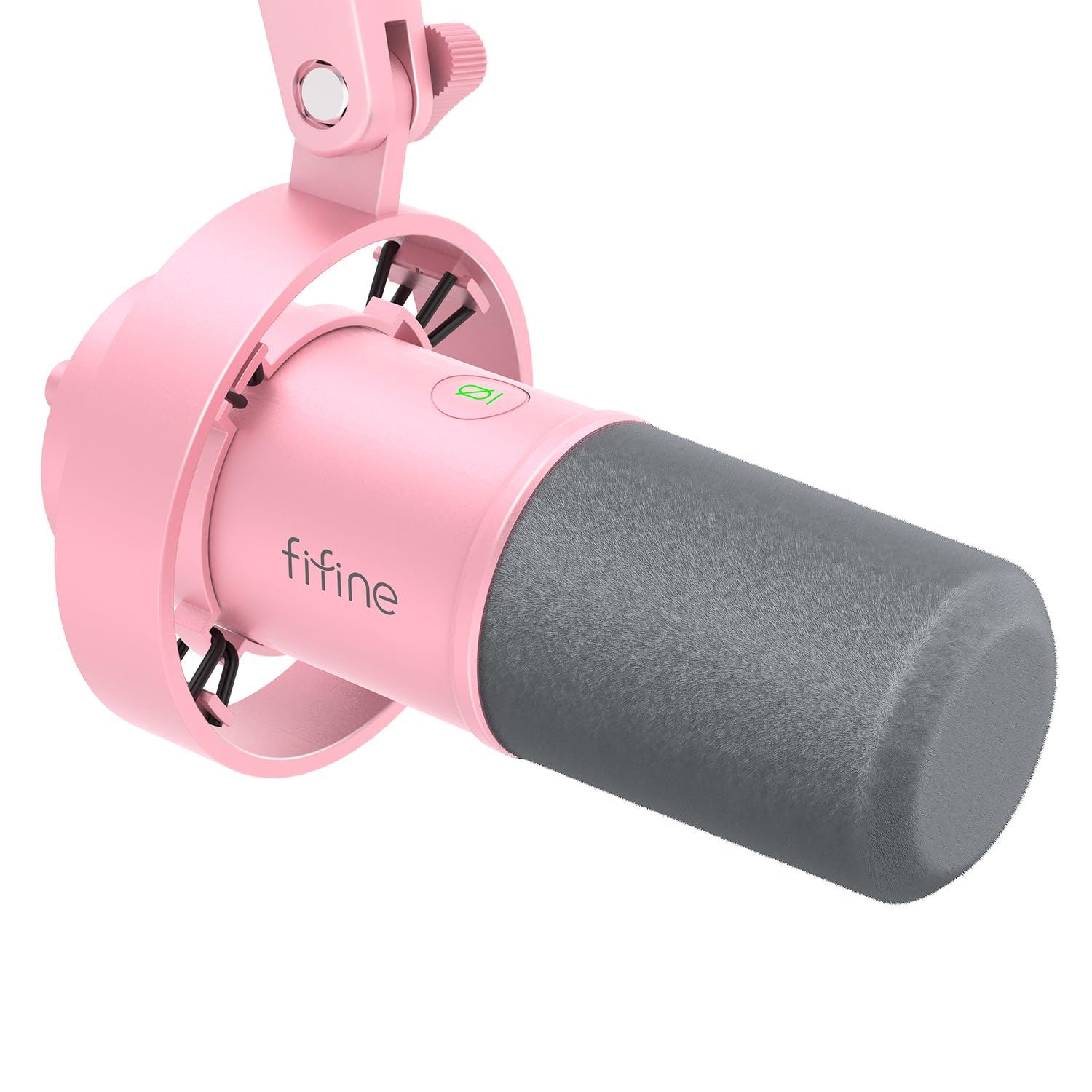
The pink K688P is a dynamic podcast microphone with both USB and XLR connections. USB connects directly to a computer with the included 8.2ft cable, and XLR can link to an interface or mixer.
It includes a shock mount, windscreen, and thread adapter, but not a mic stand, boom arm, or XLR cable. USB mode adds mute, volume, and headphone monitoring controls; these function keys are unavailable over XLR.
The cardioid pattern and shock mount address background sound and desk vibration, making this a practical option for voice recording when you already have, or can choose, suitable mounting hardware.
Best For: Voice-focused podcasters who want USB simplicity now and XLR connectivity for an interface later.
| Pros | Cons |
|---|---|
|
|
Choose the K688P if its color suits your desk and you want USB controls alongside an XLR upgrade path. It includes a shock mount and adapter, but you still need a way to position it and an XLR cable for that connection.
The gain and monitoring controls are USB-only. Compare the included accessories with your existing setup before deciding whether this mic is ready to use out of the box.
White Finish With USB/XLR Flexibility
FIFINE Studio XLR Dynamic Microphone, USB PC Podcast Microphone for Streaming Recording, XLR/USB Vocal Mic with Tap-to-Mute, Gain Knob, Headphones Monitoring-Amplitank K688 White
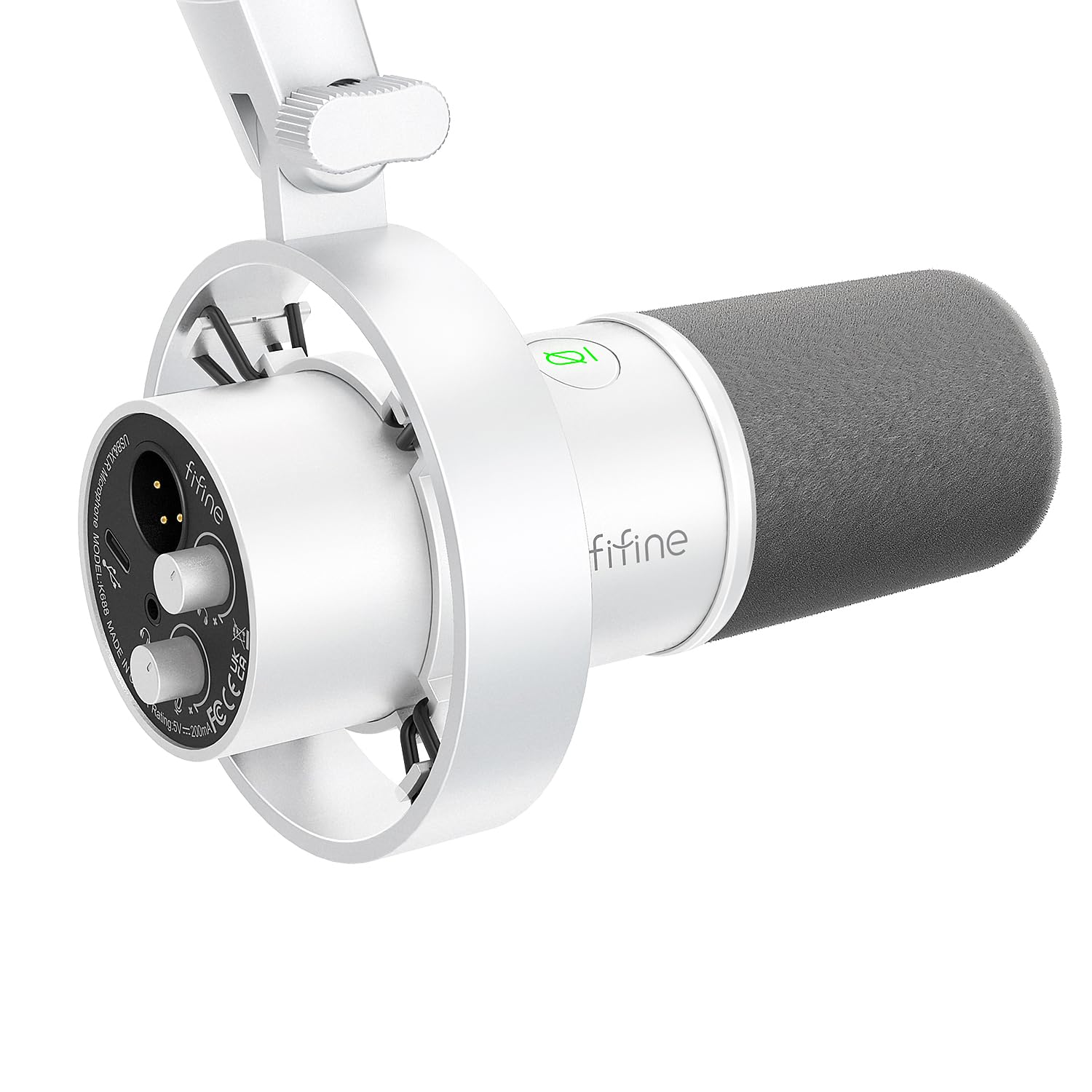
The white K688W shares the K688 family’s dynamic USB/XLR format and adds a shock mount, USB cable, and thread adapter in the package. USB mode provides a mute button, volume control, and headphone monitoring; XLR connects to an interface or mixer but does not retain those function keys.
The cardioid pickup pattern, windscreen, and shock mount are aimed at managing ambient sound, plosives, and mechanical vibration. A stand, boom arm, and XLR cable are excluded, so the included hardware is not a complete desk rig.
This is a sensible color-specific fit when the recording setup already covers mounting.
Best For: Podcasters who prefer a white dynamic microphone and already have or plan to add a stand.
| Pros | Cons |
|---|---|
|
|
The K688W fits a white desk setup and a creator who wants a dynamic mic with USB controls and an XLR path. Its included adapter, shock mount, and windscreen cover several small accessories, but the missing stand and XLR cable matter when assembling a complete kit.
Treat it as a microphone component rather than an all-in-one desktop package. Check that your mounting gear and interface match the setup you intend to use.
Two-Computer Streaming Controls
FIFINE XLR/USB Gaming Microphone for Streaming Podcasting, PC Computer RGB Mic, with Gain Knob, Mute Button, Monitoring Jack, Gamer Mic for Recording Video Creation-AmpliGame AM8 White
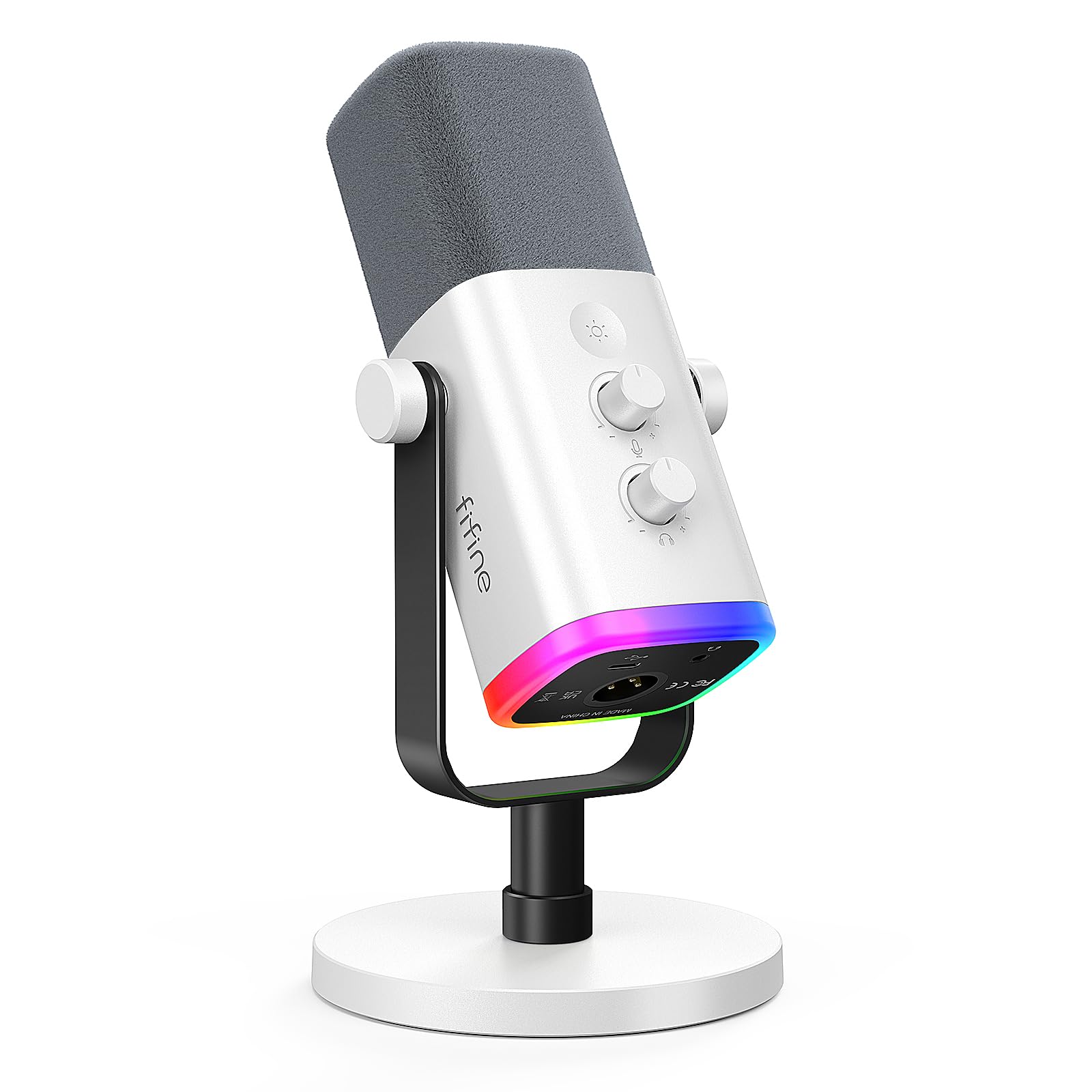
The Alias Pro Kit pairs an XLR microphone with an XLR stream mixer and software, making it the most elaborate system in this group. The mixer has customizable controls and RGB lighting, while the kit supports one or two PCs through USB-C.
Its cardioid mic has a capsule described as up to three times bigger than other mics, and an integrated shock mount helps reduce unwanted vibrations. The kit suits a creator who wants a dedicated interface and computer-routing options.
It requires more setup and desk space than a simple USB microphone, and a boom arm is sold separately if that is your preferred mounting style.
Best For: Podcasters and streamers who need an XLR mic and mixer controls for a one- or two-computer rig.
| Pros | Cons |
|---|---|
|
|
Choose the Alias Pro Kit if your podcast also runs through a streaming or dual-computer workflow and you want a mixer included. It provides routing and customizable controls beyond a direct-to-computer microphone, but that system brings more setup complexity.
Check how the included desktop stand fits your space and whether you need to buy a boom arm. The kit’s XLR design also suits users ready to work with its mixer.
Software Tools Without a Separate Mixer
SteelSeries Alias USB Mic for PC — 3x Bigger Capsule for Gaming, Streaming and Podcasting — Sonar for Streamers Audio Software — AI Noise Cancelling — LED Mute & Level Monitoring — Shock Mount
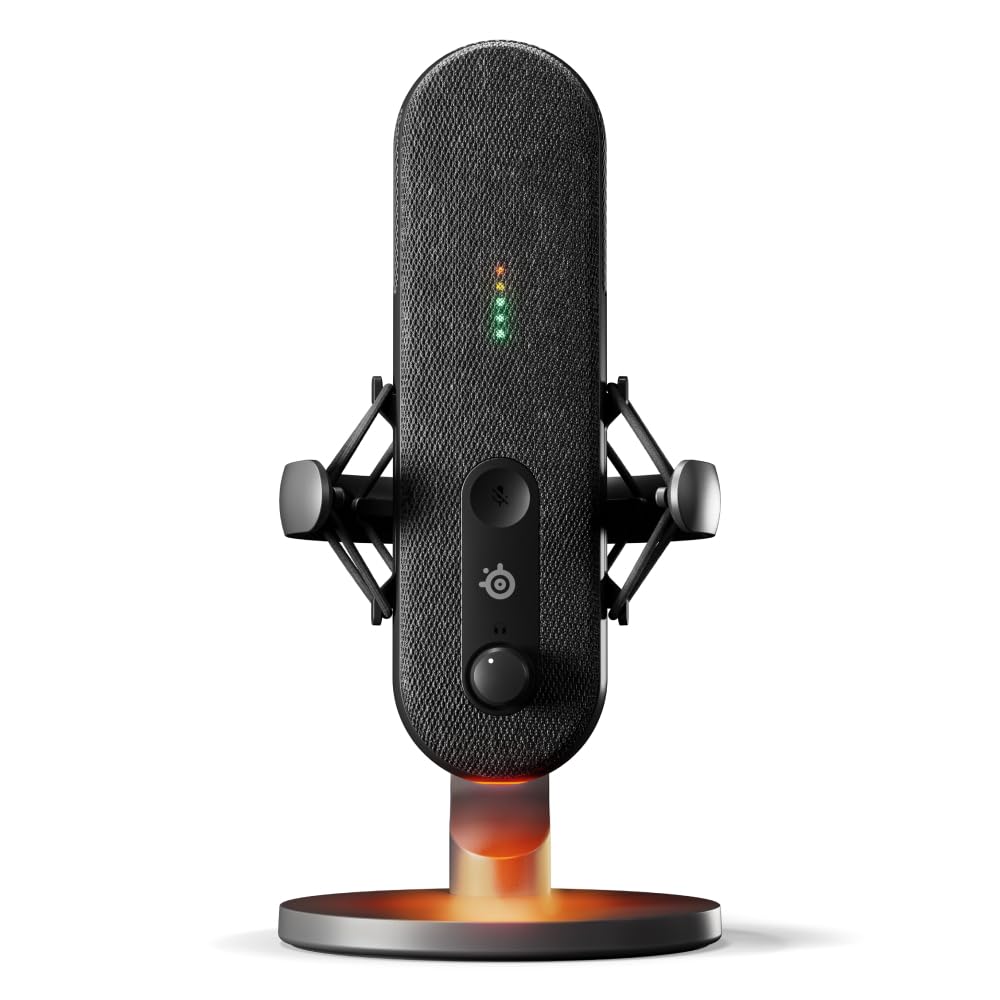
The SteelSeries Alias is a USB microphone aimed at computer recording, broadcasting, and podcasting. Its cardioid pickup and capsule described as up to three times bigger than other mics are paired with Sonar software for mixing, app routing, and AI noise cancellation.
LEDs on the microphone show audio levels and mute status, and its integrated shock mount reduces unwanted vibrations. This setup avoids an XLR interface, but it centers the workflow on a computer and the Sonar software.
A desktop stand is included; a boom arm is optional and sold separately, so check your preferred placement before purchasing.
Best For: Computer-based podcasters who want a USB mic with software mixing and on-mic level cues.
| Pros | Cons |
|---|---|
|
|
The Alias is a fit for podcasters who record on a computer and want software routing and noise cancellation integrated into their workflow. Its LED cues make mute and level status visible, and the shock mount comes built in.
It is USB-focused, so it is less suited to someone building around a separate XLR interface. Check whether the included desktop stand positions the mic well or whether you need a separately purchased arm.
Wireless Desktop Recording
MAONO Wireless Microphone for PC,Gaming Streaming Condenser Mic with Software AI Voice Change,3-Level Noise Cancellation,Custom EQ,Gain Control USB Mic for Podcast Recording (DM40-Black)
The MAONO DM40 brings a wireless option to desktop podcast microphones, with a USB-C dongle and a two-in-one USB-C cable for wired connection. Its listed battery life is up to 40 hours, and the microphone supports 24-bit/48kHz audio.
Noise cancellation offers three levels through a button or the Maono Link app, which also provides scene presets, EQ, gain, mute, monitoring, and voice-changing features. This is more flexible for movement than a fixed cable setup, but it introduces battery charging and software choices.
Check the compatibility and connection method for each device you plan to use.
Best For: Podcasters who want to move around while recording or switch between wired and wireless use.
| Pros | Cons |
|---|---|
|
|
Pick the DM40 if you value moving around or switching between wireless and wired recording. Its app includes a wide set of audio tools, while the USB-C dongle offers a wireless computer connection.
For a fixed studio desk, that mobility may matter less than the simplicity of a direct cable mic. Check how the microphone connects to each device in your workflow and account for recharging between sessions.
XLR Desk Kit Included
MAONO PD100 XLR Podcast Microphone, Cardioid Studio Dynamic Metal Desk Mic | Compatible with Audio Interface, Audio Mixer, Sound Card for Vocal Recording, Streaming, Voiceover, Music, Content Creation
The MAONO PD100 is a dynamic XLR microphone sold with a desktop stand, rod extender, round metal base, and 6.56ft XLR cable. Its cardioid pickup and built-in double-layer pop filter are intended for close vocal recording, while the metal base supports a compact desk arrangement.
The microphone connects to an audio interface, mixer, or sound card rather than directly by USB. This makes it a more complete hardware package for an existing XLR setup, but less convenient for a first-time computer-only podcaster.
Check the interface connection and placement height before buying.
Best For: Home-studio podcasters who already use an interface or mixer and want a desktop XLR package.
| Pros | Cons |
|---|---|
|
|
Choose the PD100 if your recording desk already has an XLR interface or mixer and you want a stand and cable in the package. Its desktop base and extender provide a self-contained placement option, but it is not a direct USB mic.
Confirm you have compatible audio equipment and that the desk height works for the supplied stand. That connection requirement is the main tradeoff against USB/XLR hybrid models.
How to Choose Microphones For Podcasting
How We Picked Microphones for Podcasting
These picks cover several practical podcast setups: direct USB recording, USB/XLR microphones that can connect to an interface later, and XLR models for an existing home studio. We favored candidates with concrete podcast use, useful controls or mounting details, and a clearly identifiable connection method.
Distinct needs shaped the range: the Q2U is a handheld starter, the PD100 arrives with an XLR desk kit, and the Alias Pro includes a mixer for more involved streaming and recording.
Gaming-oriented models can still suit a podcast when they have relevant vocal features, but this roundup prioritizes the recording workflow. Included accessories matter too: some microphones arrive with stands or cables, while others need a separately purchased arm, stand, or XLR lead.
Comparing Podcast Microphones
Start with the connection. USB models such as the SteelSeries Alias and wireless MAONO DM40 suit computer-first recording.
Hybrid options including the Samson Q2U, MAONO PD400X, and FIFINE K688 family can serve a USB setup or connect through XLR equipment. XLR-only choices such as the MAONO PD100 require an interface or mixer.
The Alias Pro Kit includes its own stream mixer and can connect one or two computers.
Then compare the hands-on controls. MAONO’s PD400X and PD300X offer gain and monitoring controls alongside app-based adjustments.
The FIFINE K688 models provide mute and monitoring features over USB, while the Alias shows level and mute status with LEDs. The Q2U keeps the setup simple, with fewer specified onboard controls.
| Product | Standout features | Best for |
|---|---|---|
| MAONO PD300XCheck Price |
| Podcasters who want software tone controls and both USB and XLR connections. |
| MAONO PD400XCheck Price |
| Creators who want USB convenience, XLR connectivity, and app-based voice adjustments. |
| Samson Q2UCheck Price |
| New podcasters who want a handheld dynamic microphone and both USB-C and XLR connections. |
| FIFINE AmpliTank K688Check Price |
| Podcasters seeking a dynamic USB/XLR mic with direct headphone monitoring and physical controls. |
| FIFINE AmpliTank K688PCheck Price |
| Voice-focused podcasters who want USB simplicity now and XLR connectivity for an interface later. |
| FIFINE AmpliTank K688WCheck Price |
| Podcasters who prefer a white dynamic microphone and already have or plan to add a stand. |
| SteelSeries Alias Pro KitCheck Price |
| Podcasters and streamers who need an XLR mic and mixer controls for a one- or two-computer rig. |
| SteelSeries AliasCheck Price |
| Computer-based podcasters who want a USB mic with software mixing and on-mic level cues. |
| MAONO DM40Check Price |
| Podcasters who want to move around while recording or switch between wired and wireless use. |
| MAONO PD100Check Price |
| Home-studio podcasters who already use an interface or mixer and want a desktop XLR package. |
Choosing a Podcast Mic for Your Room and Desk
Dynamic models such as the Q2U, PD400X, and K688 family are useful candidates for close spoken-word recording; several include cardioid pickup or features aimed at reducing unwanted sound. Condenser options in the supplied range include compact USB desk models and boom-arm bundles.
Think about where the mic will sit and whether you can position it near the speaker. A boom arm can free desk space, while a desktop stand needs a clear, stable area.
Accessories change the real setup cost. The T669 and T683 include boom arms, while the K688 variants do not include stands or arms.
The PD100 includes a desktop stand, extender, base, and XLR cable. Check thread compatibility and cable needs before you commit to an XLR mic.
USB, XLR, and Podcast Upgrade Paths
USB is the uncomplicated route for recording straight to a computer. Check the connector listed for the specific microphone and the devices you plan to use.
USB/XLR models let a podcaster begin with a computer connection and later use an interface or mixer, but some features are USB-only. On the K688 variants, for example, the mute and monitoring controls operate over USB; plan your workflow around that limitation.
XLR makes sense when your recording setup already includes an interface or mixer, or when the included package supplies one. The PD100 is XLR-only, while the Alias Pro bundle pairs its mic with a mixer.
Before buying, identify any missing XLR cables and stands. For wireless recording, the DM40 adds movement and wired flexibility, along with battery charging and app configuration.
Which Podcast Microphone Fits Your Recording Style?
For a first USB-C and XLR handheld option with basic accessories, consider the Samson Q2U. For a desktop XLR kit with a stand and cable, the MAONO PD100 is the clearer fit if you already have an interface.
Podcasters who want app-based EQ and USB/XLR flexibility can compare the MAONO PD300X and PD400X, checking their control and accessory details.
For a more involved streamer-podcast desk, the SteelSeries Alias Pro adds an XLR mixer and dual-computer support. The USB SteelSeries Alias favors software routing and visible level cues.
Choose the DM40 when wireless movement matters; otherwise a fixed USB or XLR microphone may require less setup. Match the microphone to the equipment and placement you already have, then verify the included cable and stand before ordering.